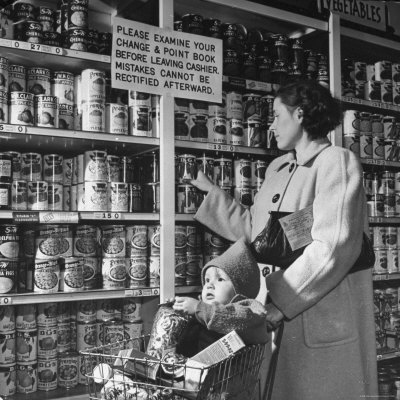
I have been writing for years about the importance of a deep pantry (lots of those links are on the sidebar) and to answer a question I'm commonly asked... no, I am not a Mormon... just a Christian who developed an interest in the subject first through my mother and then through my own experiences. :)
I have told you that we have gone to a few food pantries each month now since the nurse who helped me with my nutrition plan a few years ago suggested it. I hadn't even considered food pantries but they do help subsidize our budget. What we can't use that we are given, we take to the food pantry in our church (like white bread and white rice, sugar coated cereal, etc.).
My husband recently was asked to take part in a study about food pantries and how they can be improved. One thing he told them in every meeting was the need to have more consideration about nutrition.
So often half (or more) of the foods they give are cheap for them to purchase but not very high quality in the nutrition department. There are seasons when they have fresh vegetables to offer (and God bless those farmers and gardeners who give the pantries what they have extra!).
That is one of the reasons I use any "extra" money I have to deepen my own home pantry. As with almost everything, people are far more efficient than the government. I'd say about everything except I wouldn't be good at putting together a military and the money I'd print would send me straight to prison (with no "Get Out of Jail Free" card). ;)
There is also the obvious problem with depending on the government in a crisis. We've seen it over and over (think... Katrina!) that the government is a huge bureaucracy which can only move slowly and not efficiently when a crisis hits. When we are prepared for a crisis, unemployment, etc. then our personal needs are met with items we know and trust and without waiting for someone to come knocking at the door.
I'd say the generation before mine was the first to not stock up seasonally and even then there were still a large number of people who still knew the importance of the home pantry, root cellar, etc. It is not something we do out of fear or to hoard but I truly believe it is instinctive... a God given feeling within us which has been there since we were in the Garden... not any different than noticing the change of seasons and putting the hay in the barn for the animals.
As I've said so many times you are now rolling your eyes and sighing... stocking up on food is insurance you can eat... and with inflation rising as it is... stocking essential nonfood items will save you money in the long run. Not to mention being organized and knowing you don't have to run to the store in the middle of a recipe because you don't have enough sugar or flour on the shelves.
Using what you have now to prepare for tomorrow is a wise investment. When you think through and write down the food and essential items you need, it forces you to become wise about your purchases (and your nutritional needs!). As you find good sales on essentials and buy for less, you are stretching your family's food budget and providing a little extra for which to purchase essentials which do not go on sale.
By stocking up in season, you are like generations for thousands of years that gave thought about their food and their supplies... those which were ready for winter's cold and hard times. It's a part of our very nature... the squirrel-like part of us. :)
While government run programs are helpful, they are not the best and if you are like us... we don't even qualify for most and I'd just as soon not depend on the government regardless. Neither government run nor faith based food pantries can provide for your family the same way you can. They must use limited funds to feed the most people possible and that often means cheap, high carb foods.
What if hard times never come knocking at your door? The worst that can happen is that you have become organized about your food and essentials and purchased at good prices (when possible). However, so many "experts" I trust see dire economic outlooks ahead. How good it will be if you have already put thought into essentials of food and non-food items your family needs and have started stocking up a little at a time.
I can't afford a great deal but I can use "extra" money to purchase essentials. I've written the How I Stock Up series which explains how I do it but basically I have decided those items which help me put together meals for the family, even if I cannot purchase anything "extra". I also give thought to items we can use if we have no electricity for cooking (and this year we have had a couple long term blackouts due to weather).
It can be a great family project, getting everyone together and brainstorming what each considers important. Just a few items I always try to keep on hand: canned tomatoes, pasta, pasta sauce, peanut butter, Triscuits and other crackers, canned veggies, canned salmon and other meats like tuna and chicken, brown rice, flours, sugars, other baking needs, butter in the freezer (at least a couple extra packages), etc.
When I have a few of the basics on the shelves, I buy the second "layer" that I know will be helpful. For instance... good quality granola bars (the kind that are more than a candy bar), canned fruits, chocolate chips and nuts for baking, very good jelly and jam (we watch for no high fructose corn syrup when possible), etc. I also try to keep at least a couple gallons of good water on the shelf but more would be even better.
Then there are extras of essentials that are also only purchased when we can but are so important to have on hand... TP (there is nothing that says friendship as when your friends bring you a big package of TP, right Linda?), dishwashing liquid, laundry detergent, batteries, paper towels (high quality, it does not pay to buy really cheap paper towels or TP), garbage bags, etc.
Of course, we also have to think of those items Her Highness Victoria would need such as kibble and kitty litter and those items we may not buy often but we'd miss if we didn't have them such as the cream for muscle aches, Benedryl, pens and pencils and paper and stuff like that, etc.
As one develops a pantry mentality, it begins to affect all areas of life. For instance, I found having a small DVD library helpful when we had no other TV reception. My DVD collection is tiny compared to most because putting together a home library of books was the priority for decades.
Should we reach a point where we know we have what we consider "plenty"... we not only can take care of our own family in a crisis but we may be in a position to help those close to us who do not live in our home. Stocking up when it is done as a natural part of the seasons and not out of fear for the future... developing that pantry lifestyle... will keep us from being dependent on the government.
I don't know about you but to me that is a very, very good thing. We purchase insurance for our house and cars and for that I am thankful. We really appreciated having a fire department this summer! But when we can do something, even if just a little (and right now my husband and I can stock up only a little)... everything helps whether the crisis is an unexpected winter storm or a job loss or economic collapse.
It doesn't have to be the perfect pantry, start now a little at a time and stock only what your family will eat. (Believe me, kids who do not eat beans will not eat beans in a crisis.)
I hope this makes sense, I'm truly writing as I think... and that can be very dangerous with my thinking. ;)
Showing posts with label Recession ponderings. Show all posts
Thursday, September 29, 2011
The importance of building up our own food pantry
Saturday, May 14, 2011
The pantry lifestyle (Repost)
As I've put together pantries through the years, thought about them, studied other people's pantries, etc... I have come to the conclusion that there is a pantry personality. I know in my case it was inherited but some seem to have caught it as one finds themselves with a cold after spending time with a sneezing friend. Either way, it's not a bad gene to have been birthed or caught.
One develops a stocking up way of thinking and after many successes and failures, comes to know what works for their family and... what does not. A person with the pantry gene finds it hard to pay full price for a can of tomatoes or deboned chicken breasts for they are always on the hunt for the stock up sales, knowing these two items have a rotational sale calendar.
Their purchases are made when that certain price shows up in the grocery store newspaper section. Other items are more elusive in their stock up prices so an extra can or two or jar or two or sack or two... whatever... find their way in our grocery carts when we have a little extra grocery money to work with... such as the large size of mild olive oil.
Sometimes it requires a lot extra with the co-op orders for those fortunate enough to have one in their community. One may be eating out of their pantry as they fork over that $100 (or more) check but the return is much like a garden where one plants a seed and ends up with dozens of zucchini.... when the 25 lb. and 50 lb. bags of grains arrive, along with all natural raw sugar, honey, and other basic ingredients... one feels much like the pioneer women of old as they pour enough oats for the entire season in their waiting buckets.
The pantry lifestyle manifests itself in the way we love to cook as we tend to shop the pantry to see what is available and in the cookbooks we peruse. While I love glossy cookbooks and I do enjoy getting caught up in the occasional long recipe... I find myself stopping most often at the recipe which is simple and based on ingredients I normally keep on hand. I love to find new recipes which use pantry favorites.
I have found ethnic cookbooks with real and not Americanized recipes to be treasure troves of simple and inexpensive ideas. So are cookbooks with stories by those closest to the dirt... farm men and women, Amish and Mennonite ladies (especially their mother's and grandmother's passed down recipes), regional cookbooks, whole foods cookbooks, etc.
There are many new-ish cookbooks out today inspired by the return to locally grown non-processed foods... such as those by Jamie Oliver... albeit their recipes may not all be inexpensive but the simplest among them are (not to mention they provide great ideas from which one can piggy back and
I must admit my pantry has changed through the years just with the various stages of our life. Since most of my cooking is done for hubby and I these days, you will find more bean (and other legume) dishes on the table. Christopher does not like most beans although I believe it is the texture of most he does not like because he is crazy about hummus and tolerates a few black beans in burritos and tacos. :)
Since we are having many more vegetarian meals, the pantry lifestyle has come to include a small garden. It definitely is time to bring back the Victory Garden and the enemy is the rising cost of
Thanks to my son and daughter (and their friends), I have been introduced to a variety of ethnic foods and spices which make my heart sing and often my pocketbook, too, for many tend to be fully vegetarian or use small amounts of meat. I often smile when using cardamon, coriander, garam masala, and even simple garlic or ginger for these were foreign to my mother's kitchen (garlic powder and ground ginger, yes... real garlic or ginger, no).
Of course, having that pantry gene colors every area of my life and when you combine it with the inherited (and now refined through the years) thrift gene... well, it is an adventure waiting to happen... and skills we all need more of in this season of food shortages and increasing costs. There is always something new to learn or long unused skills to dust off and bring back.
I have learned not to put off basic skills until I may need them later (baking bread, gardening, canning, and all kinds of important "from scratch" skills) for we become better at everything we do the more we actually do it. At least I learn better from hands on experience.
Have you ever been handed down a recipe from a mother or grandmother and wondered why it does not taste the same when you make it? After years and years of cooking, I have come to realize a large part of a recipe is not shown on a card or typed in an e-mail... it is the experience in making the dish.
I've been thinking of this as Christopher wants some cooking lessons before moving into his own apartment (with friends) come August. How do I get him to understand the importance of browning the meat before making the soup or how bread feels when it has been kneaded enough or when to take the skillet off the electric burner and just let the omelet set a few minutes or what a cake looks like in the oven when it is done? All skills needing practice.
Actually, I have enjoyed learning the old skills in this modern world. I started making bread when we lived in Married Student Housing at the University long long ago... and continued from there (wishing I had learned even more through the years!)
Rather than letting ourselves get all upset about today's fiscal realities, we can do what the women of old did as they rolled up their sleeves and decided they would not only survive but do so with a certain amount of... panache.
I was just reminding my husband recently, there is a reason the kitchens of the 30s and 40s were so bright and colorful... the women needed the cheerful surroundings in the midst of war and Depression... my kitchen fits in just fine as does my 2011 Victory Garden. :)
Friday, May 06, 2011
A little pantry talk... stocking up and sticker shock
It feels like spring! For the first time this season, I could go outside without a jacket and feel comfortable. It has been a long... long... long winter.
Thanks for the suggestions about the cake mix combinations. I have combined pumpkin and yellow cake mix before and a friend has served me a cake made with the spice cake-pumpkin mix. Very good! The base of the cherry chocolate cake on my recipe blog is German chocolate cake mix combined with a can of cherry pie filling. I love having options for pantry meals and desserts.
I must admit, I've been a cake snob and usually like to make mine from scratch. However, when I made a cake recently using a yellow cake mix and frosted it with homemade chocolate buttercream frosting... Christopher said it was the best cake I've made in awhile. Sigh... I may overlook the list of ingredients and keep Cool Whip in the freezer, too. ;)
This past week has brought two phone conversations about the price of food and stocking up. One of my best friends called earlier today, my friend who lives in the desert in New Mexico. She called with a question about yeast and ended up talking for over an hour about crazy weather, the small earthquakes they have been experiencing, and the need to be prepared for anything.
Their water situation is now critical so it may necessitate a move to another state. She is always interesting to talk with, sometimes it is hard to believe we live in the same country with her surroundings so different than mine.
Speaking of yeast... a quick answer to a question I'd forgotten about! I use Saf-instant yeast, purchased in 16 ounce blocks. I keep mine in the refrigerator in an ancient Tupperware canister except for just a little kept in a glass jar on my shelf to keep at room temperature for immediate use. My yeast has lasted two years in the refrigerator this way. Stephanie uses the same yeast and she keeps the block in the freezer before opening it (also refrigerating it once it is open). This yeast has never failed me!
The second conversation about food and such this week was with said daughter... talking about keeping a family of seven fed at a reasonable cost. We agreed we both need to look at ways families stretched meals in the past. For instance, when I was growing up there was often bread on the table, especially when Mom was serving a crowd.
My mother-in-law also served bread with each meal (both mothers went through the Depression when they were very young). Italian cooks prepare lots of inexpensive pasta and French families learned to love snails. I am happy to make healthy bread and serve good quality pasta but not so much the whole "snails as food" thing.
The conversation with Stephanie was hours after I'd arrived home from Wal Mart and had sticker shock at the price of food... at Wal Mart! I had read the article by the Wal Mart executive who said their prices would increase sharply come summer. It is not summer and I'm already shocked. My husband had given me $40.00 to purchase a few items we were out of and even though I'm good at stretching the grocery dollar... it didn't go very far.
The cost of a gallon of gasoline is around $4.25 a gallon here and that certainly hurts us all! I can't imagine what it means to the trucks carrying food and supplies as diesel fuel is often more expensive. No wonder cauliflower was nearly $4.00 a pound the last time I looked for it at Kroger (and did not buy it, I may add).
Christopher took me out to lunch recently and the same lunch that cost us just $12.00 a few months ago now cost over $18.00. He was telling me it was the first time he had been there since the prices had raised but he knew it was coming, they had to just to keep the restaurant open. Even then, he was surprised at how much the increase was for the same amount of food.
In many ways, this reminds me of the years I was a new bride and inflation was playing havoc with our budgets. But it also has that feeling of what my mother talked about in the Depression. At least in the 70s, the wages usually were increasing at the same time... not so for most people now and one in ten Americans is still out of work.
So... now that I've depressed everyone... what am I trying to say... again. :)
Everything we can do to stock up a little (or a lot) will save us money down the road... and it is insurance we can eat. I had to overcome the inability to stock up very much and realize anything I do helps in the long run. I've also decided to do my own fight against inflation by looking through cookbooks and such to see how generations made it through the Depression years ago... and how those with less opportunities do so today (for instance, in the More-With-Less
Now... I must also do my part by getting the small garden planted, we had frost recently but the long term forecast looks warmer. There is a break in the rain to hopefully get some hoeing done in preparation for planting. Except for the raised bed with my herbs... all I am growing right now are weeds!
Picture: Cookbook and apples; allposters.com
Labels:
Pantry Talk,
Recession ponderings,
Stocking Up
Tuesday, April 19, 2011
Pantry Talk... Priorities when stock up money is available
Last week I was sitting in the kitchen at a friend's house, sipping coffee and chatting about such lighthearted subjects as the condition the world is in these days, food shortages, rising gasoline prices, and inflation. Thankfully coffee, a few tea cookies, and good company made such topics easier to swallow... literally. :)
My friend asked me given the fact I can only stock up when we have extra income (such as tax refunds or when hubby gets a week's work at the bookstore), then what are my priorities. I thought for awhile and named a few items but then I had to tell her that was a great question that I'd have to think about and turn into a post. Here I have written on the subject of deepening the pantry since the mid-1990s and I couldn't think of a list off the top of my head.
I did tell her that I prioritize those items I know are quickly going up in price because they are imported... like coffee, various sugars, etc. I would make sure I'm stocked up with flour regardless of inflation but I do keep my ear open to Fox Business News when they talk about inflation and shortages and there is a lot of talk now about the wheat crops suffering this year... so wheat and flour become a priority (remember just two or three years ago when wheat products went sky high due to bad weather and poor crops?).
Even though I grind wheat, my son and I like a little unbleached flour in the mixture when I make bread. My husband? He could eat sawdust, which is what we call the Ezekiel bread he buys from the health food store on Senior Citizen Discount Day. A former doctor recommended it to him for his health... blech.
I shared with her a few things I do when I know I'm going to be able to stock up a little. First, I have a priority list already written out and ready to remind me of some items when I make my grocery list, it is in my scrapbook journal but it has also been taped inside a kitchen cabinet before. I use that basic list as I look at what I already have on hand and what needs to be replaced (such as old spices) or repurchased (those essential items I'm out of or have just a few left).
The second thing I do is to look through newspaper insets to see what is on sale at the various stores. For instance, I look to see what is on a 10 for $10 sale (especially frozen veggies that cost a lot) and buy-one-get-one free sales. A reminder here... it is not a good idea to stock up on anything before trying it once. Ask me how I know? When I'm in town close to where the discount bread store is located, I like to stop by and see what they have... at huge savings. If wrapped carefully, bread freezes well.
The third thing I do is to look through the recipes I'm making the most in the current season. I told her I always need to have canned tomatoes on hand because they can be used to make all kinds of recipes. The same with high quality pasta (I've had dried pasta last two years when stored properly), some soups, canned fruit, canned and dry beans, and even items like salsa (which can be used in more ways than just Mexican food). That list will be unique for each family. If I have everything I need to assemble various recipes, then my pantry is servings its' purpose.
I also prioritize money for those items I can only purchase in a particular season. I try to buy all my honey at one of the two local farmer's markets in summer or early autumn. Most of it from the "Honey Guy" we've purchased from for years at the main market but we also purchased last year from an Amish couple at the smaller farmer's market (along with maple syrup from their trees). I'm hoping to do some freezing and canning of fresh fruit this year if possible, purchasing in season.
Another reason I plan by seasons when I can stock up is preparing for holidays and birthdays (especially important when one does not have a weekly income). During Thanksgiving and Christmas, so many items used for baking go on sale so I will budget money on these more than any other time of the year.
I am so happy we purchased a chest style deep freeze when I was still able to work at the beginning and end of semesters. There were three sizes available and we bought the middle size (I'd suggest the larger size for any family with children and/or a big garden). Chest style freezers are still comparably inexpensive and it is so good to be able to purchase meat on sale when I can do it. I have read they are the most energy efficient, although a stand up refrigerator style freezer is easier to keep organized (or so I've heard). :)
Even given our recent financial drought, I still have some whole chickens in the freezer, a few packages of veggies, and I just used the last of the bread I'd bought on sale. I have friends who store their grains in their freezers. In colder weather, I like to have everything needed for soups, stews, etc. in the freezer and in hotter weather I am more likely to stock up on deboned chicken breasts and such when on sale. I also buy butter on sale and freeze it.
Another area of stocking up we should always consider is a true emergency preparedness food stock up... those things to keep on hand which would be available if there is no way to get to the grocery store and an assumption is made that there is no way to cook (such as after a natural disaster) as well as water. My husband teased me when I stored a few gallons but he wasn't laughing when we were without electricity for awhile and our well pump couldn't work...
There are always the usual foods like crackers, graham crackers, peanut butter, Nutella, nuts, granola bars, etc. but I've also learned to think out of the box in this area for items like salsa, summer sausage (goes on sale during and after holidays), canned meat, etc. I'm always writing down what I see that would be good for the pantry. There are so many more choices of shelf stable foods these days than ever before, from taco shells to milk to tofu (have you ever tasted soft tofu whipped up with melted chocolate???).
These days I've been thinking of substitutes for more expensive items and what can be left out of a recipe and still have it taste great. For instance, I love dill pickles on my sandwiches and recently I switched from my favorite Vlasic brand to Great Value and didn't notice a difference on the sandwiches. I've found most store brands and most items at Aldis to be very good. I do prefer the better qualities of pasta but on sale they are the same price as the cheap stuff.
Recently on a frugal living blog, the writer mentioned they had found a great coffee and the reader wouldn't believe what it was... we were very skeptical. But the next time I ran out of coffee we purchased the Great Value 100% Colombian coffee at Wal Mart she recommended and we could not believe it either... it is good! It is far better than the other cheaper brands and "almost" as good as the pricier coffee. As I've mentioned before, most of the time I make coffee in the regular coffeemaker and use the K-cups only when I can find them on sale... albeit the K-cups makes the BEST coffee.
Thinking through our pantry purchases also helps us prepare the containers for storage if needed. I can assure you if I have a container ready to pour wheat into, it will be done quickly. If I don't, the wheat will sit in the garage until I need to open it and/or I'm appalled to see little teeth marks in the bag... shiver. We won't even think of it. Just trust me on that one and have any containers you need ready (from food grade plastic pails to Zip Lock bags!).
The price of food can only go higher and from what I've been reading... there will be shortages of some items. Using limited funds to deepen the pantry saves so much money in the long run and as I always say... it is insurance you can eat. Even if you can only put back a little extra (like us), it is worth it. My pantry is not very deep but it still helps to save money. If you haven't made a pantry shopping list, do so soon. It will help you prioritize!
Remember... for much more information I have lots of places you can go to under Pantry Links on the sidebar.
Please excuse any typos, I'm working quickly to post this today. :)
Labels:
Pantry Talk,
Recession ponderings,
Stocking Up
Tuesday, February 22, 2011
A really long pondering about stocking up...
After the comments in the last pantry post, I thought I'd write out more thoughts about deepening the pantry. Emphasis on "off the top of my head" kind of writing... and as it is my ponderings, it is rather long. :)
If you are really wanting in-depth "deepening the pantry" information, I'd suggest taking the time to read through my posts from the past years as well as following the links provided to other sites. They are all under the Deepening the Pantry links on the sidebar.
At one time, I lived in a large house which had a utility room in the basement that I used as my pantry. I also had more discretionary income in which to stock up. Today I live in a small-ish house (no basement) and my discretionary income is often the change I find in my coat pocket. But I'm still able to deepen the pantry because it is just a part of my every day existence... I think in pantry terms.
Moving to a much smaller house required doing things differently in many ways. For instance, I have a fraction of the storage room for the dishes and seasonal larger accessories I used to decorate with... so for the most part, I cut way back on items for specific holidays... no more Christmas teapots or Easter serving trays. (I do still have a collection of Thanksgiving-Autumnal English plates as well as four Christmasy plates... they take very little storage space and I use the Christmas plates all year.)
So, what does this have to do with stocking the pantry? I'm glad you asked. I need to concentrate on the basic items of cooking instead of the "nice to have" stuff. My priorities for space and money are the basics of baking (flour, sugars, honey, etc.) as well as wheat*. I also stock up on butter when it is on sale, slip three or four pkgs. in a gallon size Zip-lock bag, and toss it in the freezer (if you fill up more than one bag with butter, then slip a piece of paper with the date these were purchased into the bag... where it can be seen before removing butter, this way you will know which bag to use butter from first). I don't believe margarine is all that good for you but I do try to have one very good quality margarine and Butter Flavored Crisco on hand... only for the cookie recipes which require them.
Having said that, I also have a few favorite family recipes which start with either yellow cake mix or chocolate cake mix. Just recently I realized the cost of cake mixes were going up a lot so the next time I was shopping at Wal Mart, I checked to see if they still had Pillsbury cake mixes for 88 cents. They were hard to find (the pricier cake mixes all at eye level!) but they were there and at that price. I bought a few boxes of yellow cake mix and a few German chocolate mixes to put on the shelves in the garage. That price was a fraction of what they wanted for cake mixes elsewhere.
Also, I decided to purchase what I needed to complete a couple dessert recipes entirely... which meant purchasing the store brand of cherry pie filling and a couple of my favorite graham cracker crust pie shells (I rarely have actual graham crackers in the pantry). I also added one can of sweetened condensed milk to my cart (I already had one or two at home) and I purchased two bags of confectioners sugar and two bags of brown sugar to add to the one or two bags I already had. None of these items were on sale but I knew these were also the best prices in town.
I'd say one of the secrets to having a well stocked pantry is to look through your favorite recipes and then make certain you always have at least one item each needed for the recipes... and more when possible. Most of us use the same recipes each month (main dishes, side dishes, and desserts) so it doesn't take much time to peruse our favorite recipes before going to the grocery store. This way we have everything needed for a last minute meal or dessert for the family or unexpected company... and it frees us to show hospitality at the last minute.
It doesn't do me any good to purchase a chocolate cake mix and then not have a can of cherry pie filling (store brand works well) when I want to make the chocolate cherry cake. So, when I'm purchasing one of the items I make certain I have everything needed. Some items I just keep stocked, like trying to have canned pumpkin on the shelves at all times (which was hard last year!) because I have so many recipes I use it in.
Right now I don't have any chocolate chips in the house, very rare for my pantry. But I haven't found them at a good price lately so I'll wait. However, I bought a can of pumpkin each time I went to the store over the Holidays even though it was expensive, after it was not available last year.
It just gets down to the priority and what is in season. For instance, I purchased three boxes of orzo and a bag of lemons the last time I was at the grocery store since we're still in the season for my favorite chicken soup. I tend to have chicken stock on hand in cold weather more than I would in hot weather, when something else would become a priority for limited funds and shelf space.
When I was at another grocery store recently, I purchased frozen vegetables which were on sale, including the three pepper mix (sliced red, green, and yellow peppers). The frozen peppers on sale are often cheaper than the fresh items at full price but in the winter, the frozen green and colored peppers are much, much cheaper. It will be months and months before my garden will grow these.
Now, the baking items for the pantry were pretty much planned before I went to the store since I knew Wal Mart had the cheapest costs for those items. The frozen veggies were purchased for the pantry because I noticed the sale when I went to the grocery store. Because I am always thinking pantry when shopping, it is second nature to look for some items to see if they are on sale... like frozen veggies.
That particular store also puts their packaged salad lettuce blends on clearance in the morning as their sell by date nears. I always check that area upon first entering that store and came away on that trip with three bags of salad for 99 cents each. They just have to be used within two or three days. But their clearance meat section is not good at all, they don't put a very good sale on the meat which is near its' sell by date.
However, another of my favorite (but more expensive) grocery stores puts their meat on a manager's discount in the morning... and it is a great discount. That store is also good for purchasing soup bones very cheap (which you can't even find in some stores) and they very often have at least one brand of K-cups on sale.
Each store has that which is a better price or has better sales on some items than others. Today my husband has an appointment near where our favorite Target is located so he is stopping by there on the way to the appointment to purchase two bags of our favorite coffee... the Target store brand Kona blend... great price. I like to make that coffee for breakfast and save the more expensive K-cups (although usually purchased on sale) for the times we are in a hurry or when Christopher wants a cup of coffee when he arrives home in the evening... especially if he needs to stay up late to study.
Then there are those times when I stock up a lot on an item when they are on a great stock up price (most often these can be found in the newspaper's grocery supplements or online with some stores). I've mentioned before that a couple of the grocery stores in the area put their canned veggies on sale in the autumn. I've purchased four or five flats of green beans during that time when they were a quarter a can. Of course, with limited storage available, that kind of stock up has to be only for much used items. Various canned tomatoes would be another such item.
The same goes with stocking our shelves with TP and other paper goods (I store mine in the tiny shower which is in the tiny bathroom). I recently purchased three of my favorite 7th Generation dish washing liquid because I had a coupon for each that took the price down to around $1.75. I use Charlie's Soap for my laundry and thanks to a gift from Stephanie (hmmm... Mother's Day or birthday?), I haven't had to buy any laundry detergent for awhile. I'm sure there are many items we can think of to purchase on sale for later use... or full price when it lasts so long like the Charlie's Soap.
The more we can stock the pantry with items at either their cheapest price in the area or on sale... and then shop the pantry instead of going out to the store and paying full price (and save the cost of gas!)... then we eat well for the least amount of money... and fight inflation. Not to mention we have items on hand should anything happen to stop the flow of transportation, have a local or national emergency, or as so many people know right now... a job loss.
I've told you before how we lived from our pantry for months after a job loss (that was when we had the bigger house and pantry). I'm sure some people are tired of reading about my friend whose grocery stores were empty after Katrina... and she lived in New Mexico!
But as I've also said so often... deepening the pantry is insurance we can eat. Thus or my "off the top of my head" ponderings. Please forgive the questionable grammar and any typos I didn't catch.
* I have used wheat and owned a wheat grinder since the mid 1990s. I started grinding my own wheat for health reasons. But I've known so many people to store wheat for an emergency and then never use it in the meantime. If you are going to store wheat, you really should be grinding it and using it regularly or you 1) won't know how to use it when needed, and 2) your body (and that of your family) may not be used to that much fiber!
As it is, I usually mix freshly ground wheat with at least one cup of unbleached flour when I use it after all this time. If I'm making bread or cinnamon rolls for other people, I reverse that to one cup of ground wheat to three cups unbleached flour.
Our local Wal Mart now sells wheat on the same shelf as the flour...
Picture: Housewife Taking Canned Goods... ; allposters.com
Saturday, February 19, 2011
Should we trust the stock market... or stock up?
When I want to catch the latest world news, I like to watch Fox Business News... very informative and not quite the usual 24/7 news channel hype (unless the stock market is crashing). So, I've found it interesting to hear that many of the financial experts are surprised by the continuing uptake on the stock market even as turmoil increases around the world (much of it originally brought about by... or at least used by those who want turmoil... the fact there are huge price increases in food and other commodity supplies).
Of course, I don't even go near the stock market as an investor. No, my investments are made at the Kroger veggie aisle, Wal Mart's milk and dairy section, and the BP gas station in town. Sometimes an investment is made of coffee and a muffin at a favorite coffee place when I need a sanity morning out. But no stocks or bonds.
I'm writing out a grocery list after putting in my request for a couple hundred dollars of the tax return when it arrives. Just those items I believe should always be on hand. As simple as butter in the freezer and the usual flour and other baking items, canned tomatoes, various pastas including orzo for cold weather soup and warmer weather salads, dishwashing liquid, TP, etc.. Just a little deepening of the pantry on a budget... basic ingredients to insure meals on the table.
No, I don't believe the stock market and I cringe to think of those who are trusting the numbers instead of what their "gut" tells them (can you tell I love NCIS there?). I must admit my only stock I trust in right now is stocking up with any extra money available.
Christopher found out this week that the Federal scholarship program he's received money from is ending and then just yesterday received information that the State is cutting all scholarships. Along with the rising cost of food and energy which we have already been feeling, that was a shock we didn't expect. But we should not be surprised.
All this to say my friends... trust your "gut", your instincts, and most of all... what God may be whispering to you. I don't think it is a coincidence that so many people are saying they get this feeling they are to deepen the pantry, perhaps grow a few veggies in the backyard, or even take on a more agricultural lifestyle (which is not an option for most of us but can be for some).
I'm hoping we can extend our raised bed garden a bit and I'm planning on growing more food on the deck... that which will not be consumed by Chip and Dale... the resident chipmunks. I'll stock up a little more as possible and read through my cookbooks which offer inexpensive and healthy menus.
Just recently I was catching up reading some blogs when I came across a great post on Simple, Green, Frugal Co-op (one of my favorites!). The post was titled Saving Money in the Kitchen and it can be found... here. Don't forget, I have lots and lots of good links on the side bar for deepening the pantry, living a simpler lifestyle, etc.
There is always more we can learn about cooking, sewing, gardening, preserving food, buying good quality at less prices, etc. I've even found keeping an ear open when the experts talk about commodity prices to be helpful, we've all been hearing how cocoa, coffee, sugar, corn products, and cotton are going up a great deal... even before we add in the rising cost of transportation as oil prices continue up.
That's when it is time to put an extra can of Hershey's cocoa and a couple bags of chocolate chips, a bag of brown sugar or confectioners sugar, a bag of coffee, etc. on the grocery list just for the pantry. When we come across a great stock up sale, we can really stock the pantry at greatly reduced costs.
That feeling you have about preparing for what may be down the road... trust it. Then remember God is in control. :)
More recession ponderings later...
Photo: Apple Pie Harvest; allposters.com
Wednesday, March 17, 2010
Recession Ponderings - Revisiting the priority list
I know I've written about the importance of a written priority list before but it is always a good subject to revisit. Most people know we live on a fixed income and after losing a third of the Social Security when our son turned eighteen combined with unexpected medical expenses... there are months we have little or no cash left after paying very basic bills.
Thus, a priority list became essential.
What is a priority list?
It is the budget equivalent of decluttering our house or looking through our Week at a Glance and realizing we need to prioritize our time. We write down a list of needs for when we have the money to make a purchase and then prioritize them as to what goes to the top of the list, what is next most important, etc.
How does a priority list work?
When we receive any income beyond our monthly Social Security Disability check, a little goes into savings and then we look through the Priority List before making purchases. We make the most important purchase, or repair, or maintenance on the house and car. Then we go down the list as far as we can until we come to the smaller needs (like a haircut).
Is the priority list a constant?
It can change all the time. For instance, we were just making purchases from the tax refund this past month (which is why I had a little more thrift shopping funds). A stove had been at the top of our list since only two burners now work on our old stove. About a week before the tax refund was to come in, the desktop computer died... thus, going to the top of the list and making a new stove impossible right now.
Some items have stayed on the list but near the bottom for years... items needed but not essential... or perhaps just wanted and not needed?
Is there any item always on the list?
A priority is always to purchase meat on sale for the freezer and basic pantry items. We can no longer keep as deep a pantry as we used to do but we like having at least one extra of many items (and lots of canned tomatoes!).
Also, essential car and household maintenance take priority over most other purchases. If there is an outstanding bill that has not been paid, it also goes on the list. Since I am uninsured, my doctor's visits can add up so a priority with the tax refund was to pay off that bill.
How do we make certain the money goes where it is budgeted?
One thing we like to do if we have enough money (for instance, when my husband gets a few weeks work at the bookstore seasonally) is to put aside some money for groceries during those months we have no extra from our monthly check. The problem was, it would end up getting used for another need!
Then I came up with the idea of purchasing a grocery store gift card with the budgeted money, either our favorite "neighborhood" grocery store in town or a bigger store like Meijers or Target. By putting around $100 on a card, it gives us budgeted money for items like milk, eggs, salad ingredients, and fresh fruit. Obviously not a lot... but enough.
One could do the same with gasoline gift cards and such.
Do we always agree on what is a priority?
No. :)
Are any fun items on the list?
Definitely! We try to include having a family dinner "out". If there is a library sale coming up, we often will budget some money for that to find some great books for very little money. With the tax refund, my husband gave me a little money for some thrift shopping.
I no longer shop very many garage sales during the warm weather season. A combination of a small-ish house and thirty years of housekeeping equals... enough. There are a few neighborhood garage sales which happen each year where I do like to go. If possible, I'll set aside a little cash for these sales. I find walking in these neighborhood sales to be relaxing, especially since I'm usually only looking for teacups, Johnson Bros. china (to add to my autumn collection), good children's books, etc.
One thing we found in the extremely lean years was that a family (or individual) has to budget some recreation in their life or they will go absolutely bonkers. During one very bad "year with no income", my dear friends that I met online in the 1990s would send a surprise $10.00 or $20.00 once in awhile... with a message that it must be spent on something fun. Christopher was still young enough that McDonald's was a treat and you'd be surprised how much fun fast food can be when you don't eat it often. :)
I can also assure you the purchase of a great family DVD (which can be enjoyed often) is extremely important if that is a way your family relaxes. For your family it may be a new CD or giving the kids a little money and spending Saturday morning at some garage sales... but do know one must have a little guilt free fun to keep their sanity in very hard times.
Priority Lists and Holidays
One thing I budgeted for with our tax refund was to purchase some candy for an Easter basket for my son this year (who was quite sad we didn't have enough money last year). One never knows what is really important to your kids (even if they are grown up). My sister put together an Easter basket for her daughter until she was married and had her own children.
This is where a gift card to someplace like Target or Wal Mart would come in handy to set aside money for upcoming holiday or birthday treats which can't be kept in the pantry (I've heard some mothers have been known to eat holiday chocolates if they are in the pantry).
Although, of course, such mothers would never admit it. :)
I hope this post about keeping a priority list will inspire your imagination!
Tuesday, March 09, 2010
The Underground Economy, Part 4
I hadn't planned a "Part 4" but realized yesterday that I needed to explain a little more about the original book which changed my way of thinking. A comment was made that the term underground economy could make one appear to be avoiding taxes (although they knew that was not what I was writing about).
In a way, that was legally what the author was doing when the book was written. At that time, inflation was (so it seemed) out of control, interest rates were around 17% for banks, and he found his paycheck was being eaten up by what was happening to the economy combined with higher taxes. He actually came out far ahead by lowering his income (thus, his income taxes) and finding ways to live on less. The surprise came when he found his new lifestyle was beneficial to his family and they lived quite well and they never returned to life as it was before.
When my husband lost his job in Detroit (a long story that I've told before but basically a result of 9/11), it started our second year in which we ended up with little and then no income. We had to apply for state aid so I could receive free insulin and doctor's care (which was excellent in Michigan). We had a few conversations with the woman we had to go through at the state agency and I'll never forget what she told us at the time... that the middle class is always hit the worst in an economic decline (and this was before things got really bad in Michigan).
She explained that the poor already had the skills necessary for living on little and they knew where to get help. The rich usually do not get to the point they need help. We have learned a great deal since that time as my husband ended up having to go on Social Security Disability. While he was able to work at Lowe's for awhile after Detroit, he was never again able to work as an engineer (and eventually not able to work full time as he can have months at a time when he can hardly get out of bed).
That's why I believe it is an excellent use of time to learn basic skills and put in place habits and expenditures before one would ever need to live on less. (My own opinion on the economy... based on what I've read from people I trust... is things will eventually get worse and we'll see high inflation.) If one only knows how to live by depending on a high paying job, buying what they want at the grocery store, eating out all the time, spending weekends at the mall, expecting a big vacation each year (we once had neighbors who took at least three big vacations a year), wearing the latest styles, buying the latest technology as it arrives, etc., then should they find themselves living on less (or nothing) they have no survival skills at all.
If you already know how and where to shop off the financial grid for less; have a back yard garden if possible; have invested in skills like cooking from scratch, canning, sewing, deepening a pantry, using herbs, growing flowers, quilting, soap making, candle making, carpentry, plumbing, etc. (not all of them and not all at once, of course)... then should you be in a place where there is a major loss of income... you are far better off than others.
Not to mention that the very learning and using of these skills form a lifestyle which is enjoyable should one never have a financial reversal. To be honest, if hubby and I were younger we'd enjoy moving further out in the country and become even more self sufficient. Since life is not perfect (and our 2/3 an acre is enough to take care of), we built a raised bed garden and planted rhubarb near the fence line. We started a small compost pile a couple years ago. Small steps providing huge rewards.
We don't have to wait until circumstances are perfect to begin making lifestyle changes and we don't have to wait until The End of the World as We Know It (TEOTWAWKI) to be happy we made even small steps which enable us to lessen our dependence on the financial grid.
We become better only by the doing and we can do only by the beginning. Whether it is a domestic skill, or gardening, or making our homes lovely with thrift store finds... it is a good journey.
Picture: Three Hens; allposters.com
Labels:
Recession ponderings,
Underground Economy
Monday, March 08, 2010
The Underground Economy, Part 3
Okay, I know I've put too much thought into remembering the title of that book when I dreamed about it last night and awoke quite frustrated. The one thing I did remember about it was a few years after I had read it, the author had a regular weekly feature on The 700 Club which was filmed at his place and gave loads of great information (at one time The 700 Club was a great resource for learning basic skills).
Living in what he called the underground economy is part of what I have called "living off the financial grid". Just as most of us do not move off the electrical grid, most also never intentionally move completely off the financial grid as did the author of my "forgotten title" book. Some of us have been forced off the financial grid while others choose to learn skills to stretch our income.
The financial grid is economics as we were taught and grew up in (most of us)... the making of money and the spending of money... usually at full price or the occasional sale. When we live a pantry lifestyle (in which I have a gazillion posts under "deepening the pantry" with more to come), we begin to step off the financial grid. Whenever possible, we purchase food and other items on sale and stock the pantry... then "shop" from the pantry as we need the items.
When we begin to carry this lifestyle over to all parts of our lives, we are then shopping the underground economy. Like many people, I first entered this world by "shopping" garage sales for Stephanie's clothing when she was a preschooler. I soon came to realize garage sales were the way to save lots of money for household items... buying for pennies on the dollar of their original price.
I should mention that my mother had already taught me to shop the end of season sales at the "shops which sell purple" (those being the high end department stores). I believe Manuela mentioned she can find good buys at these sales and we've also found great sales. Both my dress winter coat and my down winter coat were 25% their original prices when purchased. Both were $200.00 coats I bought for $50.00 in the 1990s and both are in great condition.
While not thrift store cheap in most items, it is possible to find new items at these sales for a few dollars. For some people, this is the best way to save money... especially those who do not have the option to spend time searching thrift stores. It is not all or nothing and perfection will never be achieved so it should never be a goal. We do the best we can given our circumstances.
I didn't start shopping Goodwill until after Stephanie was married and she mentioned to me her great purchases. I had the same opinion of Goodwill many people I know still do... that they carry people's castoffs as one would find at a bad garage sale. She told me the same thing I have told others, think of what you have given to Goodwill. Hmmm... since then I always shop Goodwill (and the Mission Thrift store where one does have to sort through not so great items but jewels in the rough can be found) first. When I was looking for specific needs, I would stop in at Goodwill a few times a week (having lived near Goodwill stores twice).
Other "underground economy" places to shop are library book sales and used book stores. swap meets, flea markets, antique stores and antique malls (yes, some are pricey but I have a few in my town that have excellent prices on vintage items), Craig's List and similar online services, Habitat for Humanity and similar nonprofit stores, garage sales given by churches and other nonprofits (which often sell items very cheap at the end of the sale since they don't want anything left), and even getting friends together to swap clothing and items.
A new-to-me way of getting off the financial grid is building a raised bed garden and growing veggies. Hubby and I were thrilled with the results. When we have available funds, we also shop the farmer's market which is open May through September... these items not being the cheapest available but always fresh and good and we're supporting local farmers and gardeners.
Which reminds me that one also needs a community of skilled craftsmen for those skills we don't know how to do. For instance, we have kept cars going for years and years over their expected demise because of our excellent mechanic. He has even fixed minor problems for no cost because he knows we'll be back for the big repairs. Buying used cars is one of the biggest ways to save money. (New cars still under warranty must be repaired by the dealer unless otherwise indicated.)
This is also a good time to mention comments left in Part 1... that being one has to be aware of community building codes when doing your own home improvement. Both where Stephanie and her family live and the college town we are near have strict housing codes about who can do major home repairs and remodeling... as in they must be licensed. Stephanie and her husband have found it cheaper to sell their house and move to one that is larger because of the expense it would require for the changes they needed to make in their present home.
I don't believe where we live in a rural area the rules are so stringent. Hehehe, the country does draw quite independent minded people. Even then, we live in a neighborhood in the country so we must pay attention to what is appropriate. For instance, should we decide to keep chickens in the backyard we'd have to check to see if that is allowed where the farmer down the road doesn't have have close neighbors and has more freedom.
Just as one becomes familiar with living a pantry lifestyle, the more we learn about the underground economy (purchasing for pennies on the dollar, doing work ourselves, learning basic skills, etc.) then the more freedom we gain over our life. If we can learn to live on far less than we think is necessary, we aren't stuck in jobs we hate just to pay for what we own... or what owns us. Even if we love a job, learning to stretch our income will enable us to have margin in our finances. Margin brings peace. It sounds simple but when one has grown up with different thinking... there is that ah-ha moment.
Not everyone can quit their job and become completely self sufficient but everyone can do something to become less dependent on the world's system of working to buy and working to pay full price and working to pay on the high interest credit cards. Learning to be happy with less stuff and then enjoying the rich life that comes with becoming more skilled each year in the underground economy is well worth that lifestyle.
Oh, I should add... I have been teased quite a lot about praying before I shop garage sales and thrift stores (library sales, etc.) but I get the last laugh when I find exactly what I'm looking for. He blesses the hunt. :)
Picture: John Bull magazine; allposters.com
Labels:
Recession ponderings,
Underground Economy
Friday, March 05, 2010
The Underground Economy, Part 2
As I mentioned, the book (whose title still hasn't come up but thanks for trying) which first taught me about the "underground economy" had a huge influence on my thinking since I read it in my late 20's. It went completely against what we were being told from every other mainstream source but instinctively I knew it was right. The very bad recession of that era did have others advising people to live simpler and more frugal lives but no other author I read had actually changed (and improved) their life as much as this family. (Later we would find a similar family with the Tightwad Gazette books.)
I've said before that a good friend of mine used to say she believed God allowed us to go through some of the bad times so we could share what we learned... thus, the reason I originally started this blog. Well, that and to talk about books and coffee and tea parties... but that was all I could get in the title. Everything else falls under the "Me". :)
At first, gaining knowledge and skills was more on the level of a hobby but I came to realize how invaluable they were. Later, when we went through two separate years with no income (and other years we had to take a pay cut), they were invaluable. To be honest, I begin to enjoy life more when I gained the skills which were known by generations before me. I didn't learn everything at once and I still have much to learn but I came to realize time and/or money spent learning skills was a good investment by being able to do rather than having to pay when needed (or just because I enjoy the doing).
Just as I say deepening the pantry is having insurance you can eat, gaining new skills and learning how to utilize the underground economy is insurance you can use. Even if I don't bake bread every week, I still make it once in awhile to keep my skills updated (what you don't use... you lose). After cooking frugally and from scratch now for decades, it doesn't take much thought to throw together a cheap but nutritious meal or soup or stew or dessert... or stretch a chicken to feed a crowd as Edith Schaeffer taught in Hidden Art. :)
Each family is quite individual in what skills will be beneficial but learning as a family (or with friends) brings everyone together and makes it more fun. It is never too early to learn many skills. My kids were both quite little when we would go to garage sales and they learned how to quickly walk through and note quality and if there were objects we were looking for at the time (each was given a couple of dollars to spend only at garage sales when they were young). Stephanie excels at slowing down as she passes a sale to take it all in for needed items (they're called "tag sales" where she now lives).
Christopher went through growth spells since we have been living on S.S. Disability but everyone comments on how well dressed he is... Goodwill. Our store has great selections. He has had to purchase slacks when they go on sale at the department stores but has managed to find great sales. Instead of complaining about living on little money, if the parents are keeping a positive and faith filled attitude, kids will be better able to learn important frugal life skills (which I believe are going to be skills they thank you for later).
Both of my kids had to go to work at age sixteen (part-time) to purchase clothing and any extra "wants and desires". At first I felt guilty but now I can see how "all things truly work together for good". Those early lessons of earning their own money certainly have been beneficial.
Of course, all of this skill learning was done a day at a time and not knowing what the future held... days which could be stressful and busy with plenty of other things to do. As I look back, I wish I'd made the time for all of us to learn more useful skills (especially veggie gardening, which I am just now learning). However, as we lived one day at a time... imperfectly but usually doing the best we could... we all have become good at many items and excel in others... those skills which have been used over and over as the years progressed.
Other skills were not used and would have to be refreshed... like sewing and quilting... although I never could make clothing. I didn't get the sewing gene, neither did my mother or daughter. I suppose if I'd kept at it as I did with other skills, I'd be pretty good today but it was not something which came easily... the making of clothes that actually fit, that is.
While my husband did not leave a job on purpose, as did the author of the book, he did have periods of unemployment and then had to take an early retirement (S. S. Disability). One does not have to jump off the mainline economy completely to be helped by learning how to live off the financial grid... whether completely or as part of a family economy.
The thing is... becoming part of the underground economy is a lifestyle... just as is homeschooling is more than education... and deepening the pantry is more than buying extra groceries. I'll chat more about that next as we will need to go to a Part 3. :)
Picture: Home Making: allposters.com
Labels:
Recession ponderings,
Underground Economy
Thursday, March 04, 2010
The Underground Economy, Part 1
Years ago I read (and re-read) a book written from the perspective of the late 1970's - early 80's recession (and I can't remember the title). The author was very well educated (PhD) but had chosen to leave his professional position and live a life working lower paying jobs mixed with living off the land. He and his family learned to do everything they could themselves rather than paying someone else to do it, grew a large garden, and continued learning by reading and taking classes (especially at the community college where skills were taught).
I wish I'd kept the book, I gave it to the library sales when I thought I no longer needed the wisdom it offered. I'd love to re-read it today... slowly and with a fine tooth comb (so to speak). It was this book which first opened my eyes to what he called the "underground economy" where one could live quite well on very little income.
At the risk of greatly underdefining (is that a word?) his lessons learned, he came to realize his quality of life became much higher when he left a high stress professional job where his take home pay was being eaten up by increased taxes together with a high rate of inflation. He started "doing" what he had payed others for in dollars whose value was decreasing all the time.... by simplifying their life and learning to live off the financial grid.
Some changes made were-- growing a garden, looking for needed items at garage sales and thrift shops; driving older cars; bartering; investing in classes to learn skills such as cooking, canning, sewing, carpentry, plumbing, mechanics, painting, well... you get the idea. His family learned how to take vacations with little money and send their kids to college for less. All because they found there was an underground economy where one learned to live life differently than what they had been taught... that being make lots of money and spend lots of money.
I've thought about this book often in the twenty-plus years since reading it (over and over). It came to mind a couple days ago as I walked through Goodwill and noticed all the beautiful clothing, shoes, household items, etc. one could purchase for pennies on the dollar from their original cost. I think of it when I am at the grocery store and see how much money is being charged for baked goods, processed items, and all pre-made foods (of course, not all being unreasonably priced).
It was this book which inspired me to take cooking, flower arranging, and quilting classes in my 20s and 30s (I wish I'd taken the time for even more skills learning). My husband was also influenced long ago, learning to do whatever he could as he had time. These skills became invaluable when we had no income (I have limits... he is not allowed near electricity and we're good friends with our mechanic). :)
The underground economy is nothing new for it is the way the generations before us lived each day of their life. There was a time in this country that only the wealthy could afford to pay someone else to do that which we take for granted today. When one learns there is life outside of paying full price, life can become less stressful and more creative... not always easy but well worth it.
Now, obviously my husband didn't quit his job but he did utilize every skill he learned. Our home is full of beauty and books and so many good things in spite of living on a very small income. I'll share more about our journey in Part 2.
Picture: Homemaker-First Issue; allposters.com
Labels:
Recession ponderings,
Underground Economy
Wednesday, August 19, 2009
The beauty of forced frugality
I doubt most of us would use the word beauty and forced frugality together... at least until the view you are achieving is from the rear view mirror. Years and years later one looks around at the skills developed and the life being lived, only to realize they would not have come about except for the day to day living when there is more creativity than money. :)I thought about that this week as I was in the kitchen and working on small projects. Both the guys were away from home. I had plenty of time to think and ponder and work on decluttering projects (for there are always places in a small house which need to be decluttered). All those little items on my "to do" list are now "to done". It is amazing what two days alone (in the daytime) can do...
Yesterday afternoon I baked a loaf of honey wheat bread as promised for my husband, made the best salmon patties, set sliced cucumbers and onions in vinegar and sugar, and sliced some tomatoes... all coming together for a cheap but delicious dinner... leftover salmon patties carefully covered and set aside for a late dinner when the guys arrived home.
The bread recipe was learned long, long ago for the benefit of health and our pocketbook (kept taped inside my kitchen cabinet), the salmon recipe only recently discovered as a way to add salmon to our menu on the cheap (I used to hate salmon patties until I found this recipe, which is now on my recipe blog).
Sitting on my kitchen counter this week has been a small bowl of cider vinegar with a squirt of dishwashing liquid... battling gnats which somehow came in with veggies and reproduced. At one time I would have sprayed poison but I couldn't afford to buy any so I found a cheap solution, and it worked! So many of our "going green and good for the planet" solutions have come about by the need to be frugal.
There is a simplicity that comes when one must stay home for long stretches of time to save gas or the money isn't there to shop, go out to eat, sign the children up for various classes, or flitter from one friend to another (flitter?). Staying home is hard for some who have been used to leaving each day. It is only when one becomes good at staying home that it is possible to look at housekeeping other than maintenance... moving into the realm of creative homemaking... for such a lifestyle requires time.
I love going out to the garden to pick green beans for dinner or zucchini for a quick bread or cake (using the same batter in a 9 x 13 dish). As mentioned in another post... skills continuing to be learned as we're stretching money as a family over the years. New recipes are being researched as we use more beans, lentils, etc. in various recipes.
I was listening to a TV show recently where the author being interviewed had written about learning to live with less money. She thought some will come out of the present economic crisis with their life changed for the good, having gained many useful skills and learning how much joy can be found in a simpler and more frugal lifestyle... as she had after leaving a high paying corporate position.
Going through tough economic times can be very difficult. I have been there when a decision was made to put the house up for sale before we lost it. I have been to the grocery store when a decision was made to purchase either milk or bread (which is why knowing how to make bread became a priority... we don't own a cow). :)
Living on less can make convenience hard to come by but it also forces us (as in forced frugality) to gain knowledge and experience which come only by doing things for ourselves... and that can be a heritage passed to the next generation just as important as what is found in a bank account.
Personally, I believe such lessons learned are worth all the gold in California as one decides to depend less on what money can buy... manage expectations... develop skills for living... and stop complaining about circumstances but becoming less consumers and more producers... even it is just a tomato plant on the deck and bread in the oven.
As the Word says... do not despise small beginnings... and don't stomp your foot and complain that you are being forced to learn to live on less. In the long run, you will be thankful... someday even if it is not now. :)
Picture: Grandma's Garden, Robert Duncan; allposters.com
Friday, July 24, 2009
Recession ponderings... you can live on less
If there is one thing I have come to realize these past few years, it is that one can live on a lot less than they ever thought they could. Just when I thought we were at the very least we could live on... another $200 was taken out every month to pay for Christopher's surgery.
I can't say it is easy but it is always... interesting. It never ceases to amaze me how provision is made unexpectedly. Last month I had "extra" money come in so I purchased a few items needed for the garden, meat for the freezer that was on sale at my grocery store, restocked some basic pantry items, and was even able to purchase a few clearance flowers (together costing less than one went for at the nursery).
Yesterday Christopher called to ask if I was "making anything for dinner" (I can always tell when it is getting close to the end of his bi-weekly pay period). Fortunately, I'd defrosted a few items in the refrigerator and could put together a nice chicken stir fry for the three of us. My husband has remarked a few times how happy he is that I had purchased items for the freezer and pantry.
It's a little dicey at times, having to look for change through the house to be able to purchase a small coffee at McDonald's while waiting on my son (he needed the car that evening... yes, we share one car between three people who live in two houses). It is amazing what one can do when needed.
So, what is your point, Brenda??? Well........ it is this, my friends. I can live on much less than I used to only because I have the experience to do so... and those skills are learned on a daily basis over time.
Such skills as:
Baking bread
Cooking "from scratch"
Knowing what leftovers will come together for soups, casseroles, etc.
Stretching meat and other proteins
Thrift store shopping
Driving by a garage sale at 35mph and knowing if it is worth stopping or not
Substituting ingredients or changing recipes when I'm out of something
Purchasing really nice presents for little money
Making presents
Rich decorating... cheap
Purchasing expensive clothing, purses, shoes, etc. for a couple dollars or less each
Building a home library for pennies
Quilting and crafting... but not sewing clothing (believe me)
Well, you get the point... and many of these skills were developed when I had "enough" money because the lifestyle was enjoyable.
Believe me...
are you listening?...
drop the chocolate bar and look into the screen...
voluntary frugality and simplicity of life is a whole lot easier than if you come into a season of forced frugality without the skills.
I am now learning... gardening with the raised bed garden, freezing zucchini, pressure canning, and that I shouldn't plant tomatoes next to the fence in the back yard.
For all the knowledge and skills I've been accumulating for over the years, there is always so much to learn (my original files are from the 1970s when people were writing about frugality, getting back to the land, and simpler living... also during a time of severe recession!).
I love... love... love reading blogs such as those listed on my sidebar (they don't come any better than Rhonda's Down-to-Earth blog and her links to start with). I just have to remember when an Australian blogger talks about winter they mean June through August. :)
It took awhile for me to learn materialism is not the measure of success... simplicity and living a frugal lifestyle are good (and can be very enjoyable). These lessons taught to our children will serve them well.
One step at a time... one skill at a time... one day at a time.
Friday, June 26, 2009
To Carpe Diem or not to Carpe Diem

I love the phrase Carpe Diem... seize the day! Wikipedia says the poet Horace (who made it famous in his poem) used it as... "enjoy, make use of, seize". As one who feels time has been fast forwarded, I like that definition.
I am enjoying being stuck at home due to absolutely no money. No, really (which is probably why I love reading Laine's Letters so much... she had to do the same). I have a letter sitting on the breakfront ready to be sent but I don't have the money for a stamp.
Now, I'm not telling you that to feel sorry for me. I'm really fine as I am surrounded by beautiful nature, my diet is limited but healthy, and my son put gas in the car for me when he received his paycheck. He asked me to help pick out a bouquet of roses for his friend he's taking to the homeschool prom this evening and told me to buy a few groceries at the same time. He even let me buy a Caffeine Free Diet Pepsi and a pint of half-n-half.
Hehehe, I found a bouquet of gorgeous pink roses in a display which were half the price of similar roses in the refrigerator display. We came home and I "tweaked" the bouquet to make them look quite uptown. Doing things the frugal way can be fun.
It all becomes about attitude... if I allowed myself to get upset that all my favorite garage sales have now come and gone without me even having a dollar to spend... then I'd be ungrateful for everything I have. God has never failed to provide everything I needed, even if life was uncomfortable now and then.
It's all about seizing what is good about the day we live and corralling our expectations...
My New Mexican friend was telling me recently about a couple they knew who were just thrown out of their third rental house in a row for not paying rent. They had called to see if she and her husband could take their horses for awhile (the answer was no). What amazes her is the lifestyle this couple expects as both work but live far beyond what reality should be for their situation. They do not pay their rent but they have a brand new truck, horses, and other luxuries. Carpe Diem is good when within our means.
But then there are those who are just the opposite... my father-in-law had a Depression mentality and went far beyond being frugal. Even though they had plenty of money in savings and absolutely no debt outside of their mortgage, they rarely did anything to make beautiful memories. The time our children are at home is fleeting, one honestly does look back when the youngest turns eighteen and wonders where the years went.
My husband and his siblings have few good memories of growing up, even though they had a stable home life in a pleasant middle class neighborhood. When my father-in-law died, he had plenty of money in the bank but his children didn't shed tears at his funeral. I did, which shocked everyone as he hadn't treated me well... I guess having married into the family I "saw" him differently.
Don't fear the future. If you have an income and are financially stable... Carpe Diem! Who knows what next year will bring? Well, we do know the family will not be at these ages. Of course, I'm not talking about going into debt or spending the mortgage payment to go have fun. Don't buy a brand new truck and horses if you can't pay the rent.
No... but if you have a little "extra"... make some memories. I didn't have my father with me very long. His work was seasonal and he knew he'd be out of a job each winter. But I have never had to go into counseling due to my father for in the short ten years we had together he never showed fear about what life would bring.... instead he planted flowers, made furniture, cooked meals when Mom worked late, caused me to laugh, cried when Patsy Cline died (and I cry when I hear her music), made it impossible for me to see cows or horses when driving on a highway without remembering how excited he became when viewing animals, and planted those seeds I'd need later in life... our ability to enjoy life is not dependent on our bank balance.
Be careful... be frugal where necessary... become more self sufficient... try your best to stay away from debt... fill your recipe box with delicious frugal recipes... re-read favorite books... watch uplifting and warm hearted movies... hug your furry friends... sip tea from a beautiful English tea cup... organize your pictures while remembering pleasant days... sit on your deck or porch and watch the sun come up while enjoying the morning cup of coffee... surprise the family with a chocolate cake for no reason whatsoever... bake bread and serve it warm with real butter... live life... teach your children how the good life can be enjoyed on a budget.
Don't be afraid of the future.
Carpe Diem. Your children will thank you.
Picture: Sent to me in an e-mail by a dear friend a couple years ago to cheer me up. It worked.
Wednesday, June 10, 2009
Pantry talk: why keep a pantry?
I probably wrote about this before, perhaps a couple of times in my stocking up or pantry talk posts... but this time I'm living out of the pantry so perhaps it is from a different perspective.We've ended up in an uncomfortable financial position due to rising prices and unexpected costs. This month we began paying off the doctors and hospital for Christopher's surgery. He didn't even spend the night in the hospital (since they knew we were uninsured) but it ended up costing around $24,000. Everyone cut what we owed them by about 60% but only if we started paying them off starting in June... a total of almost $200.00 a month. That was our grocery budget. Yikes!
Of course, not everyone will find themselves on a fixed income combined with unexpected major expenses but there are so many reasons to start and deepen a pantry. It is truly insurance you can eat.
I know you must invest time as well as whatever money you can afford but the benefits are great. If nothing else, you can stock the pantry during sales and save a great deal of money in the long run (not to mention how many less last minute trips to the store you will make).
It becomes easier as one develops a pantry mentality. For instance, even though I had little money for food this month I purchased enough french lentils to last a year. I like them much better than the brown lentils I can buy at the grocery store and they are far to expensive at the health food store.
My friend who belongs to a food co-op was able to split the bag between a few people so I could purchase plenty for a fraction of the regular retail price. That's the pantry mentality... buy cheap and stock up when available to have on hand when needed. Oh, why did I buy lentils now? Her family may be leaving for the mission field within a few months and this was my last opportunity to order through the co-op where she belongs (she added a small bag of wheat as a gift). :)
Another very (very) important reason for having your own pantry and deepening it when possible has come to light once again in my own life as we went to a couple extra government and church run food pantries this past month (in addition to the one pantry I go to each month).
The foods are mostly processed and high carb as they are often the most inexpensive for them to purchase. I find only one or two grocery sacks of food are items I can eat (and even then most are not the healthiest). When you build up your own pantry, you have available foods you already use and your family is familiar with... and may be much more nutritious.
There are also some items I have to throw away when I get home. I have no problem with slightly dented cans or packages (I buy them myself on clearance racks) but we've received some items so dented and so crushed that I throw them away for safety reasons.
The food pantry I went to this week is one that often has meat and milk (we were able to take home a package of lunch meat, sausage, and they even had a bunch of bananas along with canned goods) but it often runs out of many foods before the line is half way along. I got such a chuckle as there was one orphan box of orzo set aside from the packages of noodles and spaghetti. Not the usual pantry food. It came home with me. :)
I do still have food in my own pantry having stocked up on items essential to putting together at least a few menus... canned tomatoes and tomato sauces which add a lot of nutrition, good quality pastas (better for diabetics), canned tuna and chicken, canned green beans, peanut butter and good quality jelly (without corn syrup), and most items necessary for baking (although I've running out of some things), etc.
I also still have a little meat and frozen veggies in the freezer. I had frozen an extra Easter ham when they were so cheap and it is defrosting in my refrigerator to drop by Bonnie's house later this week. That along with some canned veggies and one or two baked goodies will help stretch her small grocery budget (they get less Social Security then we do but they also qualify for food stamps... which we don't) when Jean arrives.
That's something else about keeping a pantry... it's not to hoard for just our family out of fear... it is there to bless others whether to share with others or to have the ingredients on hand to make a meal and/or baked goods for others who need a meal. I truly believe that God gives seed for the sower (and bread for the giver) and there is always someone more needy than us. We are truly blessed in many ways.
I'll write a little more tomorrow about why a pantry is a good thing...
Labels:
Pantry Talk,
Recession ponderings,
Stocking Up
Subscribe to:
Posts (Atom)